Primobots
Co-founding a Web3 AR/VR startup and shipping a 5,555-piece 3D collection, a Snap Lens AR filter and full-body metaverse avatars.
- 5,555
- 3D NFTs modelled in Blender
- 12
- user interviews
- 14
- months across three phases
- 2
- AR/VR utilities shipped
Context
Primobots was a Web3 AR/VR startup I co-founded in 2021 with Ish Verduzco, working out of Los Angeles and remotely. It ran fourteen months across three phases (five, four and five), and I was the sole designer for the whole of it, alongside my co-founder and a small team of engineers.
We knew right from the start that our project couldn’t settle for being another run-of-the-mill website or app. In 2021 almost every NFT project shipped the same thing: a 2D JPEG, a Discord and a roadmap of promises.
The problem
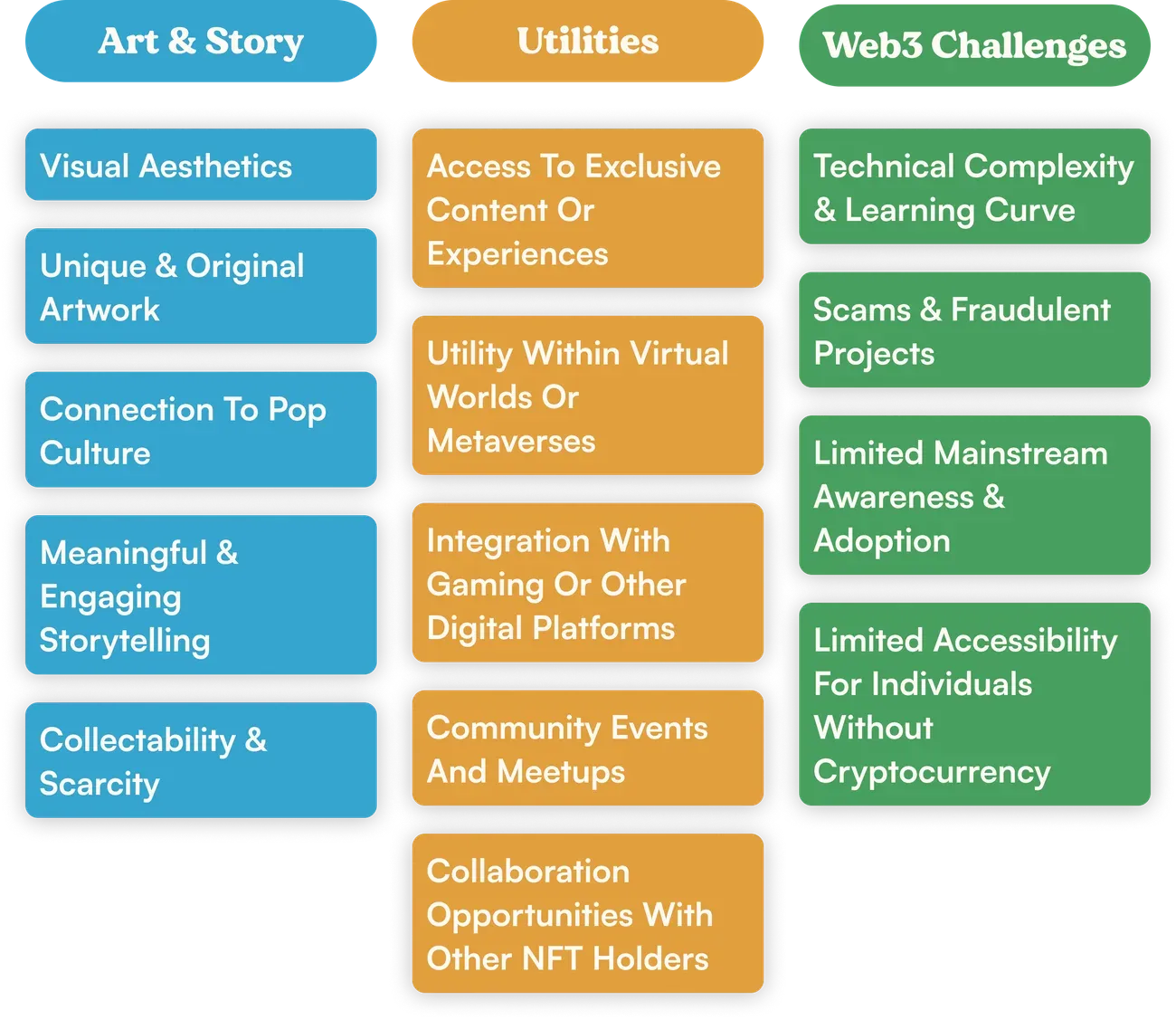
Twelve in-depth interviews gave us three questions to answer: what aspects of art and story in compelling Web3 projects resonate with people, what utilities they want from founders after buying in, and what stops them from acquiring Web3 knowledge or entering the space at all.
The affinity map was blunt. Art alone didn’t hold. People wanted utility and storytelling alongside it. Our NFT had to be more than a mere JPEG, something that could embark on thrilling metaverse adventures. The barrier to entry was mostly fear: the space was complicated, full of scams, and people didn’t trust their own judgement enough to move. As founders, we had to enlighten our customers with Web3 knowledge through our brand.
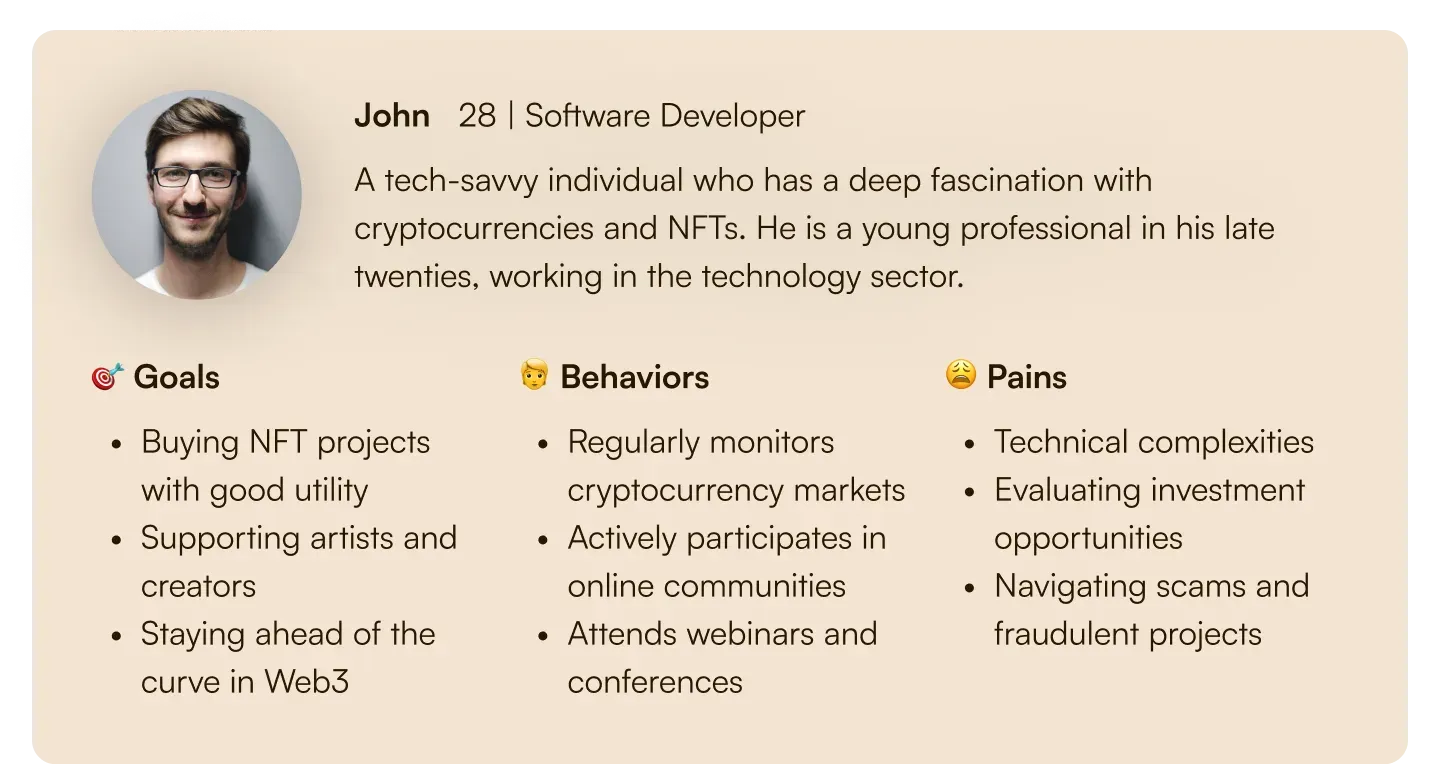
That gave us the question the project ran on: how might we create an NFT project with good art, story and utility for John, so that he can use it in the metaverse and stay ahead of the curve in Web3?
My role
Co-founder and the only designer on the product, doing design and art direction, but a meaningful share of this was engineering, and the two aren’t separable in how it got made.
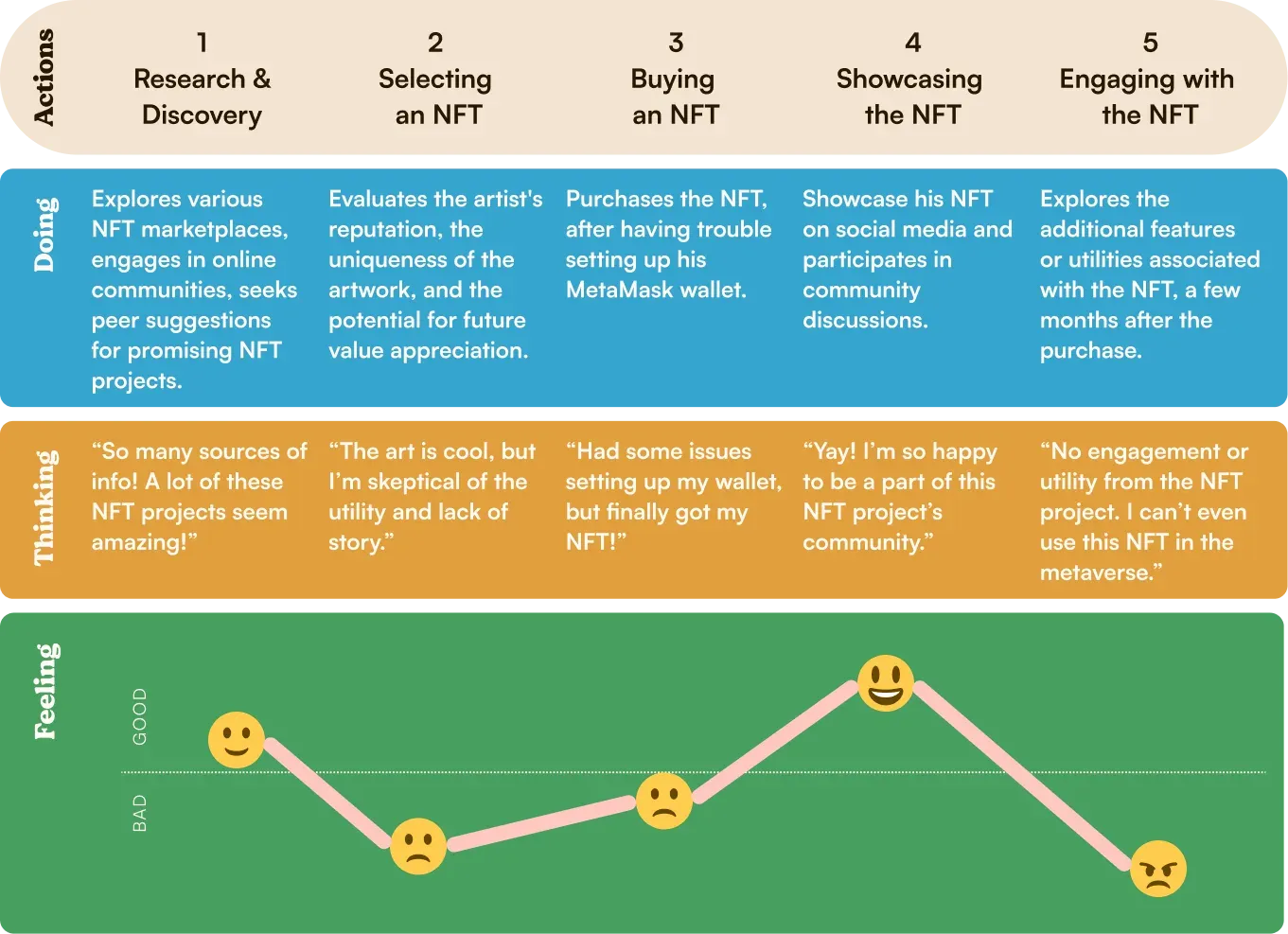
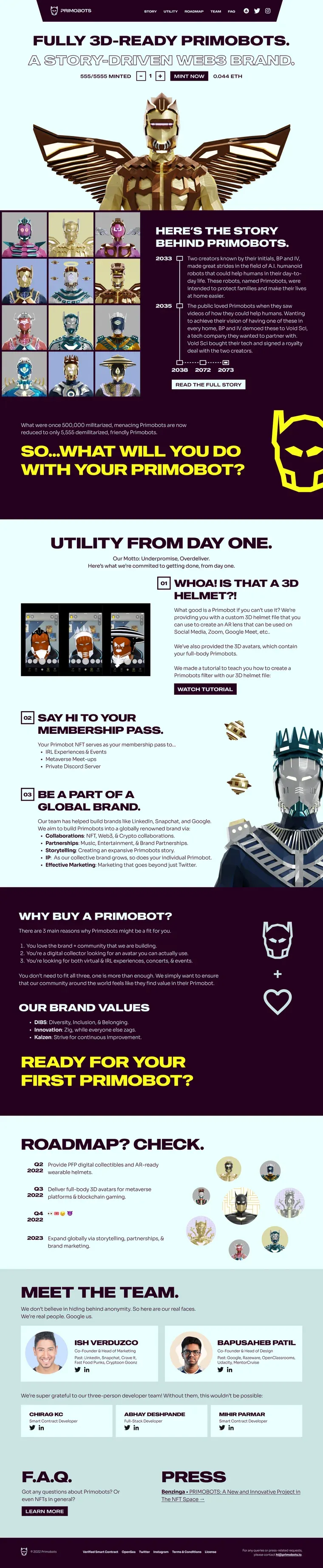
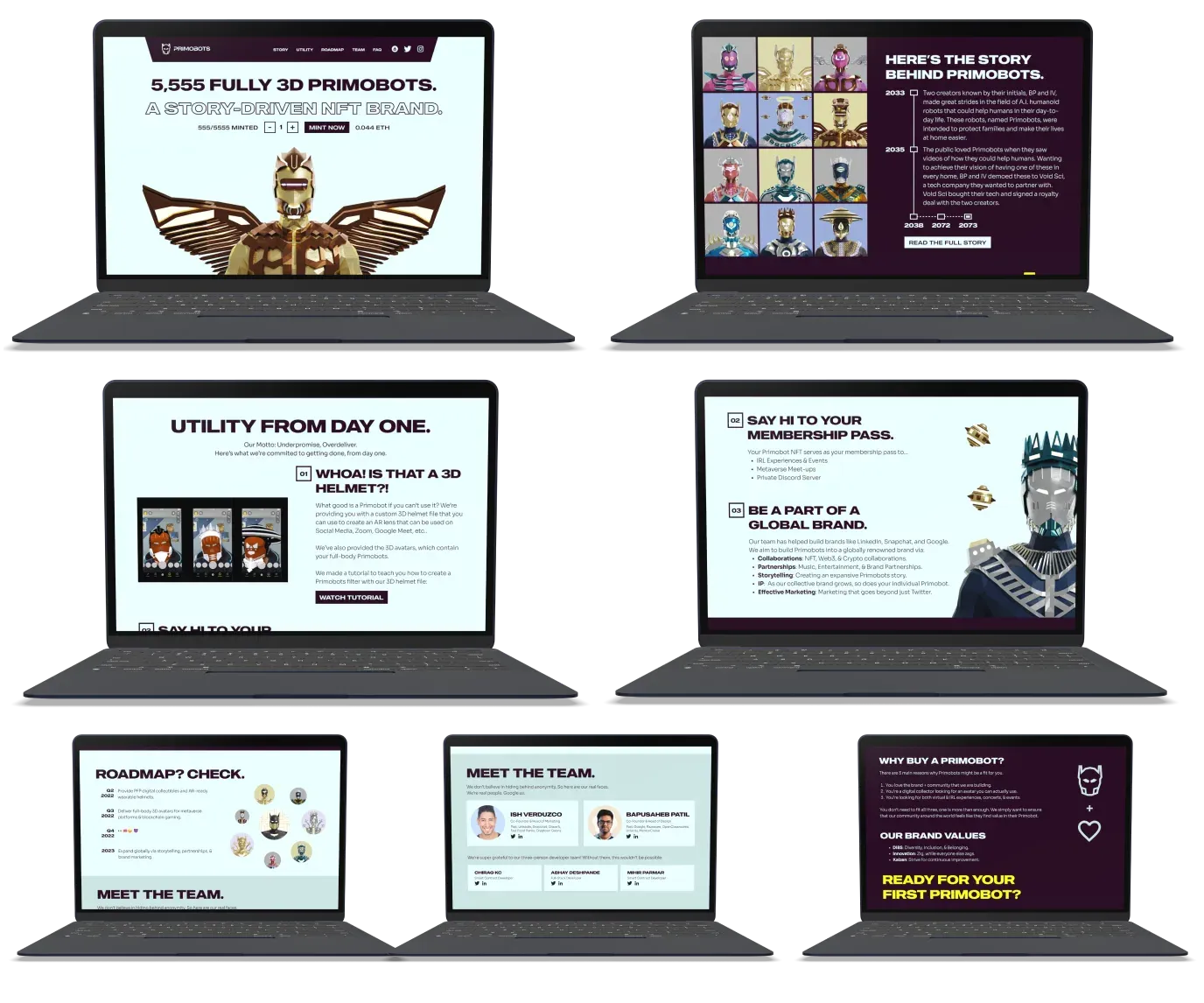
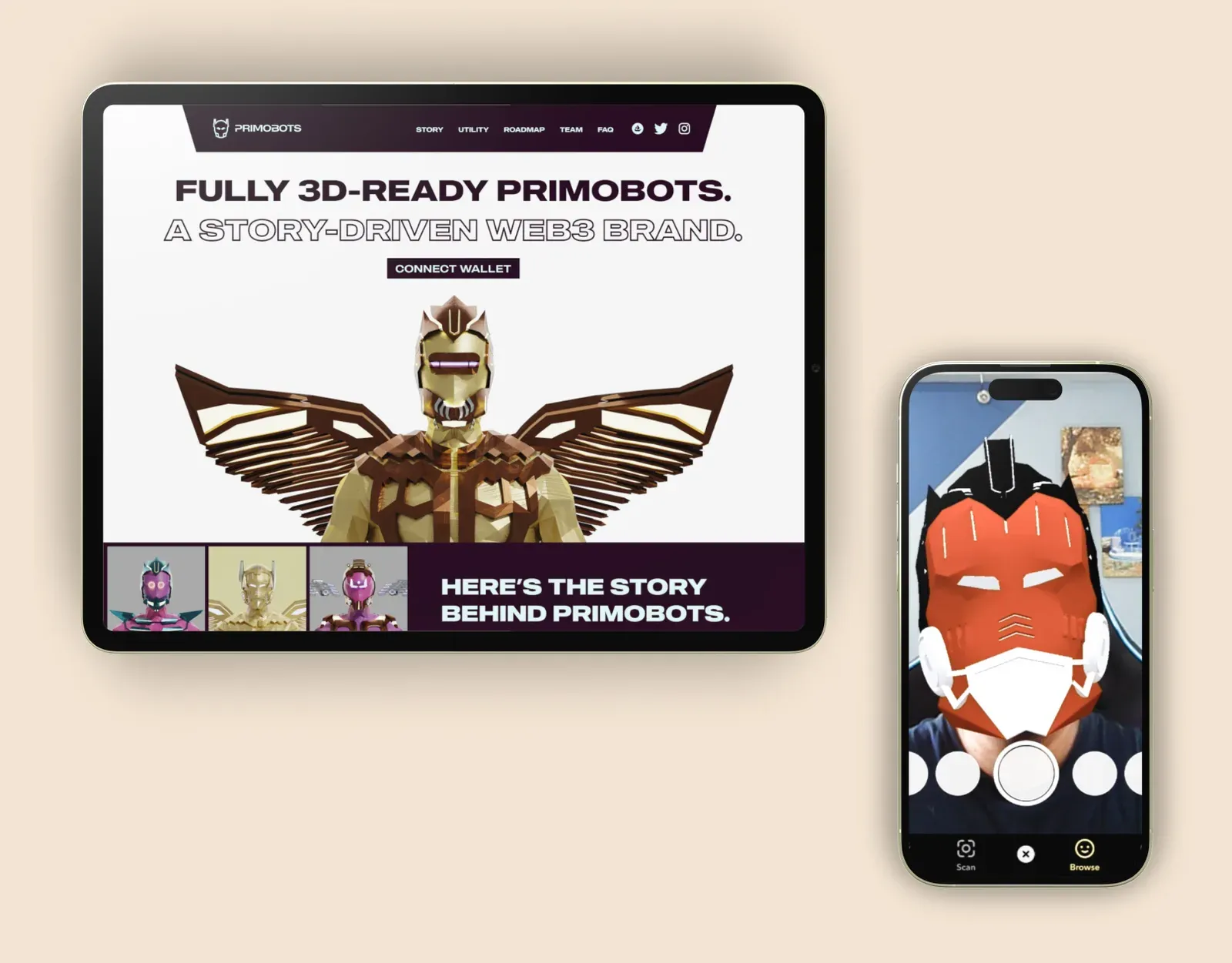
What I designed: the brand identity, the persona and journey map, the story and its world, the modular character system, and the full information architecture and high-fidelity design of primobots.io: hero with mint interface, story, utilities, why-buy, brand values, roadmap, team, FAQs and press.
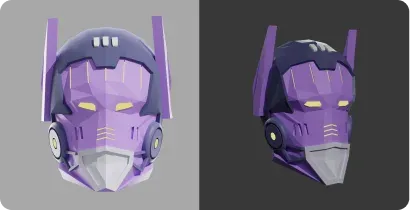
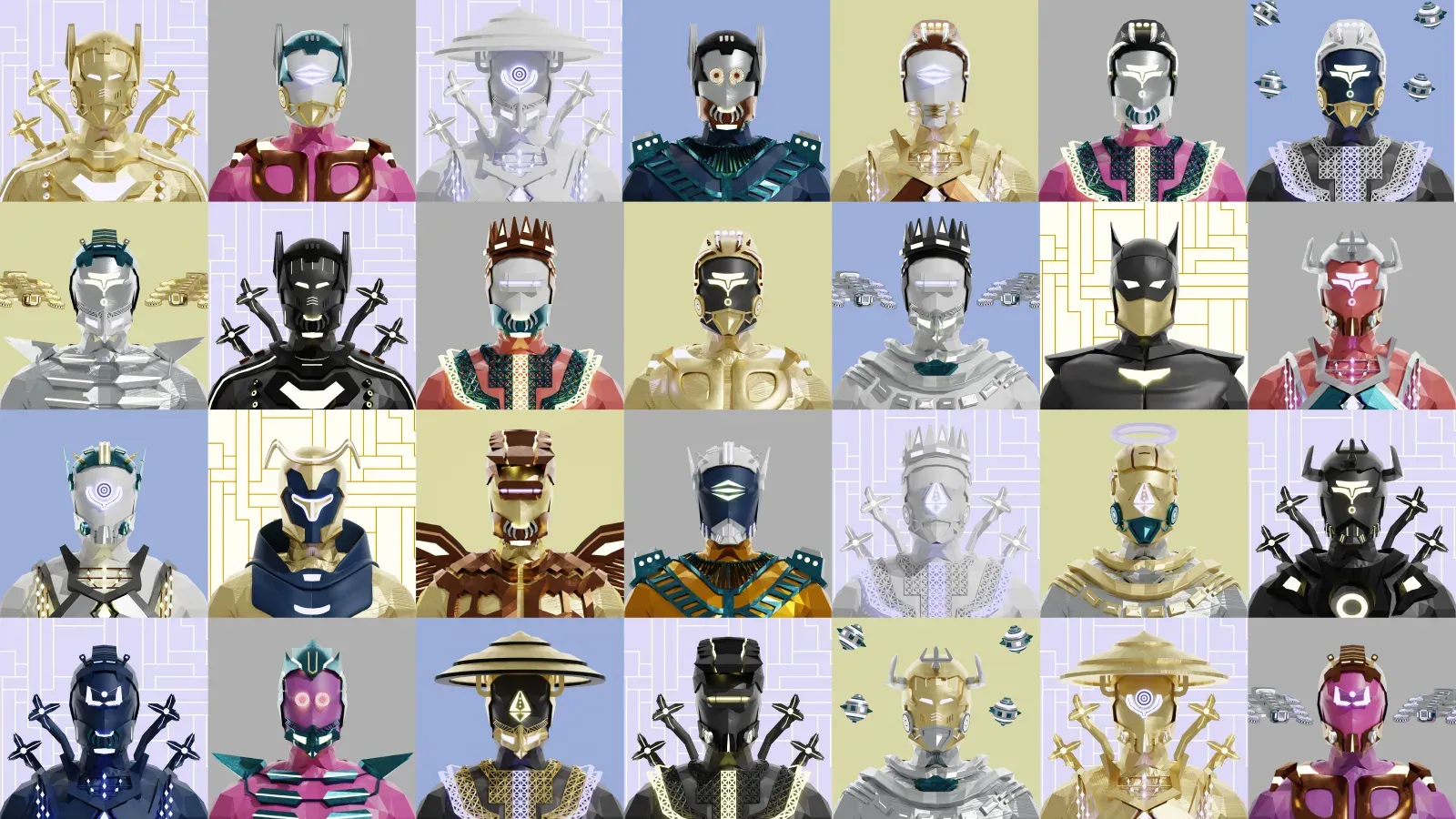
What I built and shipped: the entire 3D pipeline in Blender, from base mesh through trait system to renders for all 5,555 Primobots; the Snap Lens AR filter in Snap Lens Studio; the rigged full-body avatars for Neos Metaverse; the launch trailer cut in Premiere Pro and After Effects; and the written and video tutorials that got holders using both utilities. Our engineers built the mint and the contract. The art, the AR and the VR were mine end to end.
Approach
Three pillars came out of the define phase, each aimed at a specific finding.
Art and story, because projects with a strong narrative and a real visual point of view held their value and their community far better than ones without. We took inspiration from pop culture and superhero narratives and landed on a sci-fi future full of A.I. humanoid robots, set in the year 2073.
AR/VR utilities, because the fastest way to prove a project wasn’t a scam was to hand people something that worked. Building in 3D from day one, unusual in 2021 when most collections were flat, was what made an AR and VR roadmap possible at all.
Web3 education, because the barrier we kept hearing about was knowledge, not money, delivered through in-person conferences, remote workshops and a Discord community.
Building it
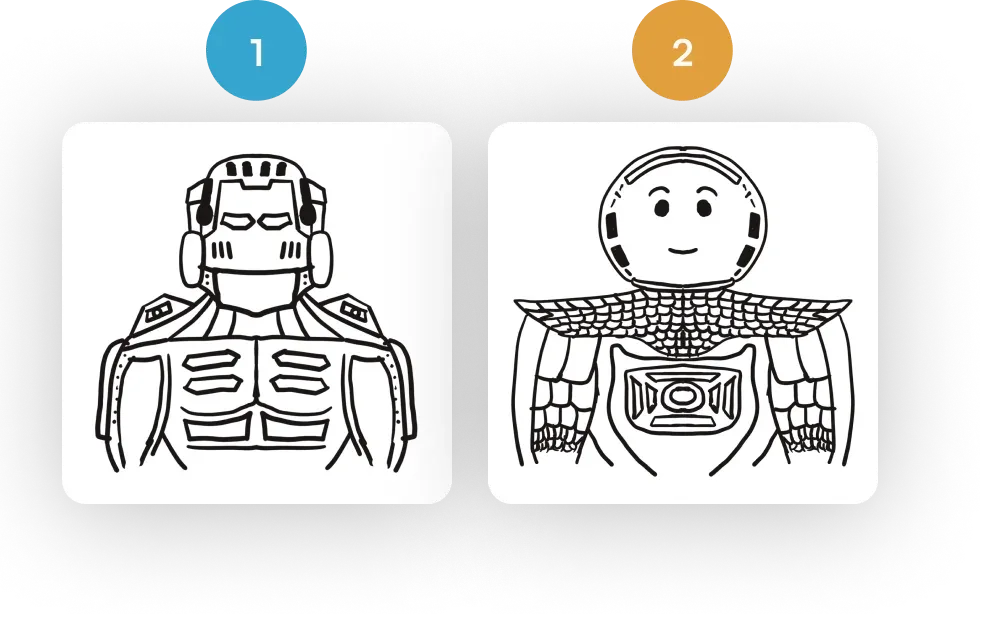
Two base character designs went up for review. Option 1 won on modularity: head variations, mouthpieces, eyes, body armour and accessories could all be swapped without breaking the silhouette. In Blender I modelled that base, then split it into trait layers so a single rig could generate 5,555 unique Primobots and stay coherent across every one of them. The full collection was iterated in Blender, and a trailer went out to set the visual direction before launch.
The website had to communicate our brand values, share the utilities and roadmap, show the artwork and story, and let people both buy an NFT and download their AR/VR assets. The hero carried the mint interface with a real-time mint count and pricing, then story, utilities, why-buy, brand values, roadmap, and finally team, FAQs and press for credibility. Early supporters tested it, and their input refined the high-fidelity design before build.
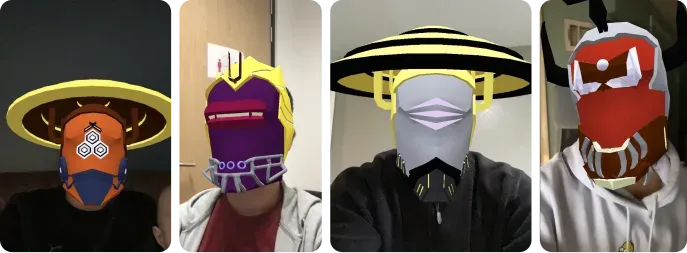
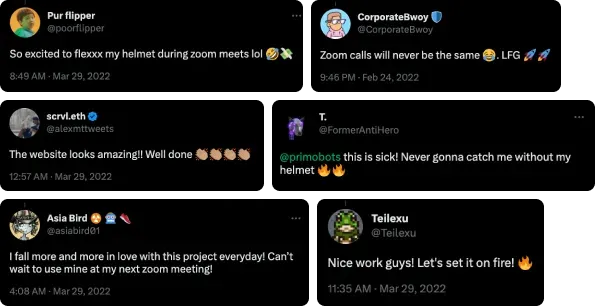
The Snap Lens filter, built in Snap Lens Studio, does one thing well: it replaces your head with the Primobot you own, live, on a video call. It buys you privacy, it means you’re camera-ready when you aren’t, and it’s genuinely funny, which is most of why people used it. I wrote a tutorial to get people past setup.
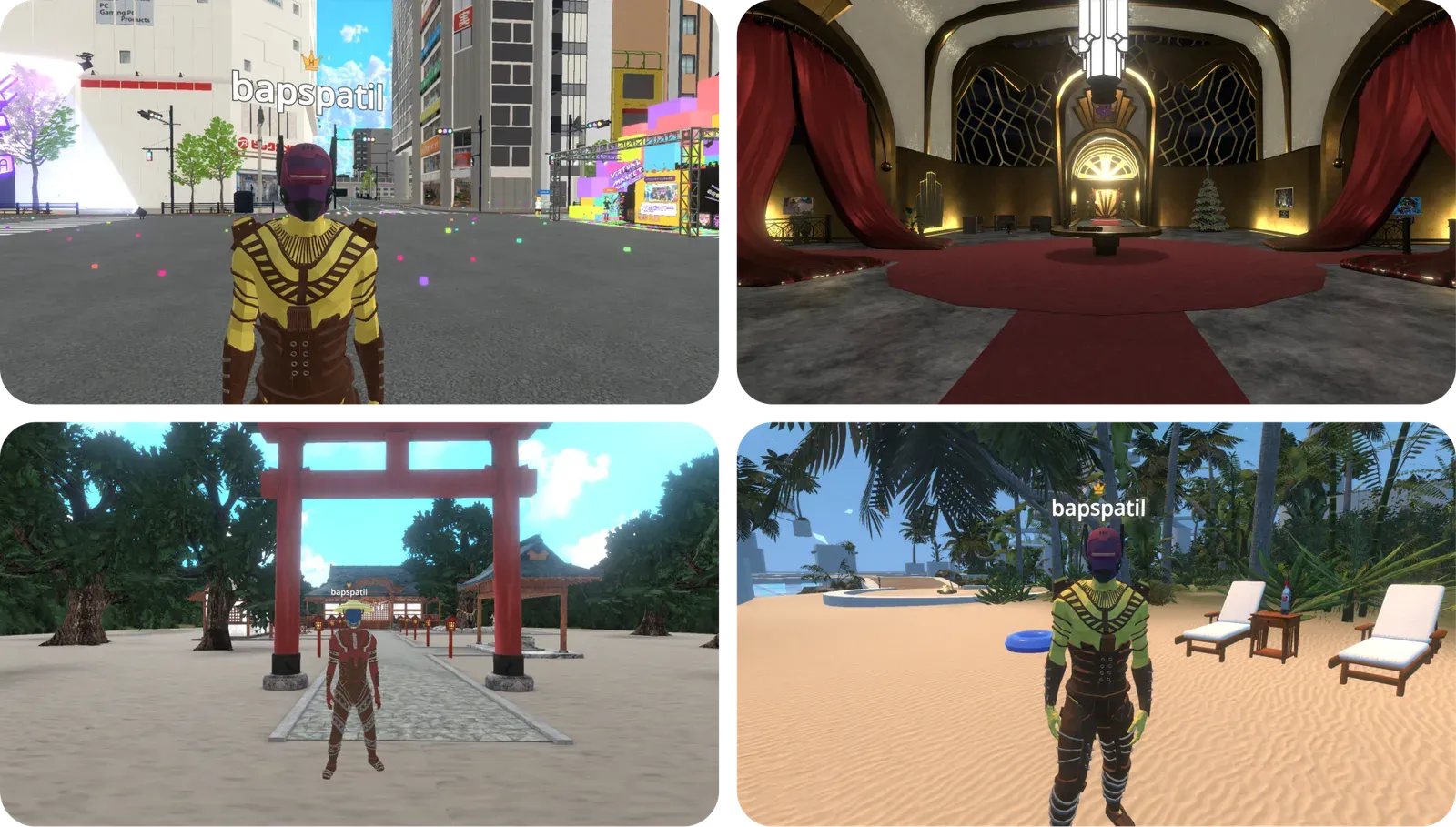
The metaverse avatars were the harder build. I chose Neos Metaverse for its flexibility with custom avatars, and rigged full-body Primobots that holders could wear into virtual events and worlds, turning the NFT from a picture into an identity you could show up in. A video tutorial shipped with it.
Outcome
We delivered against all three pillars: art and story, AR/VR utilities, and Web3 education.
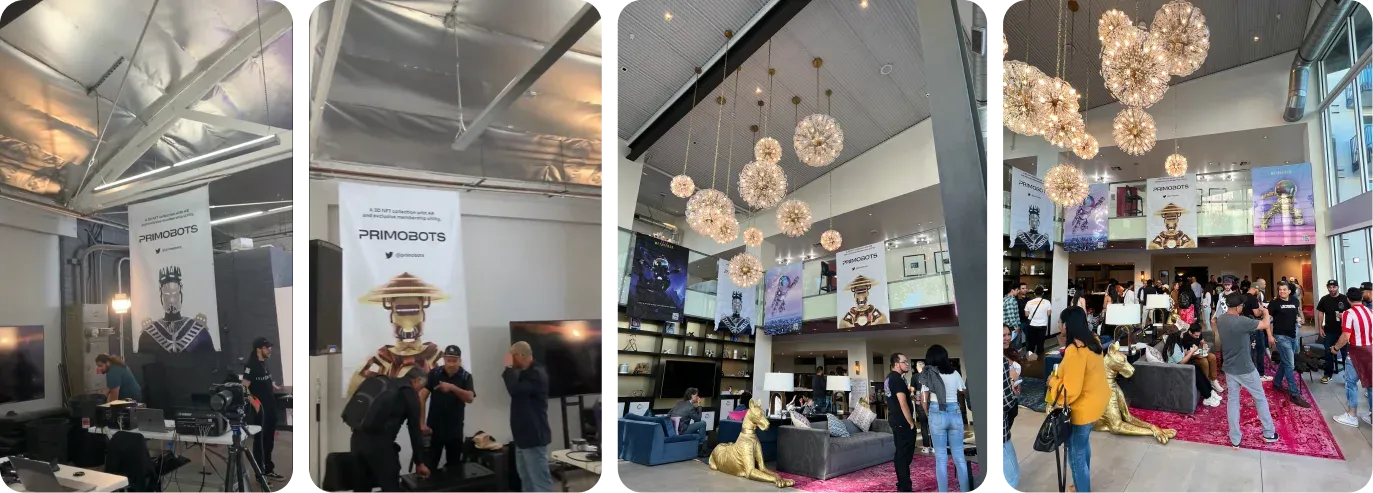
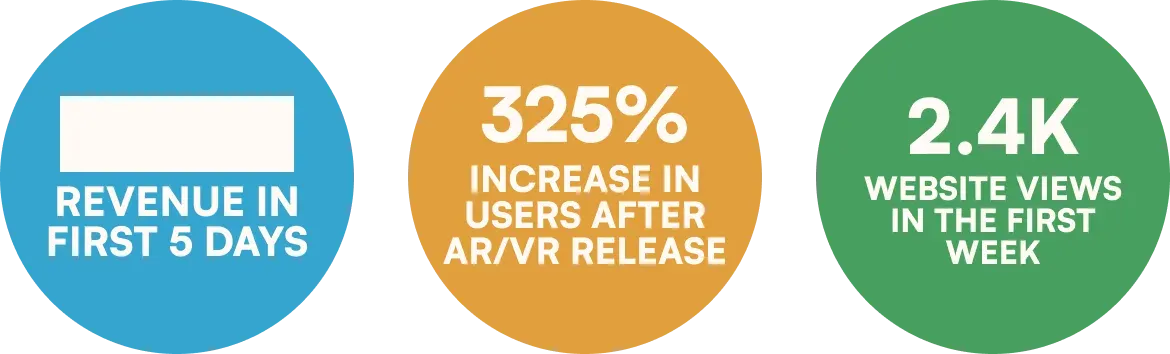
Most traffic came from the United States, with strong engagement on the story and utilities sections. Scroll-depth analysis fed back into what we wrote and where. In-person events drew real attendance and drove more meetups after launch, blockchain gaming projects opened partnership conversations off the back of the utilities, and the project picked up press coverage including Benzinga. Revenue figures are withheld.
Phase 3 carried it further with an Adobe Aero utility, expanded community events and product partnerships.
What I’d do differently
We bet a headline utility on a single third-party platform we didn’t control. Neos was the right technical choice in 2021, but the avatars only lived where Neos lived. I’d ship to an open format first, glTF or VRM, and treat any one metaverse as a destination rather than the container.
Both utilities needed a tutorial before anyone could use them. Those tutorials were good work, and they also measure the friction: every step between owning the asset and wearing it cost us holders. I’d make the Lens one tap from the site and the avatar one download, with the tutorial as a fallback.
And education was one of our three pillars, but it lived almost entirely in Discord and at events, outside the product. The people who most needed it were least likely to be in the server yet. Putting it on the site, ahead of the mint, would have served the exact pain point the research found.